
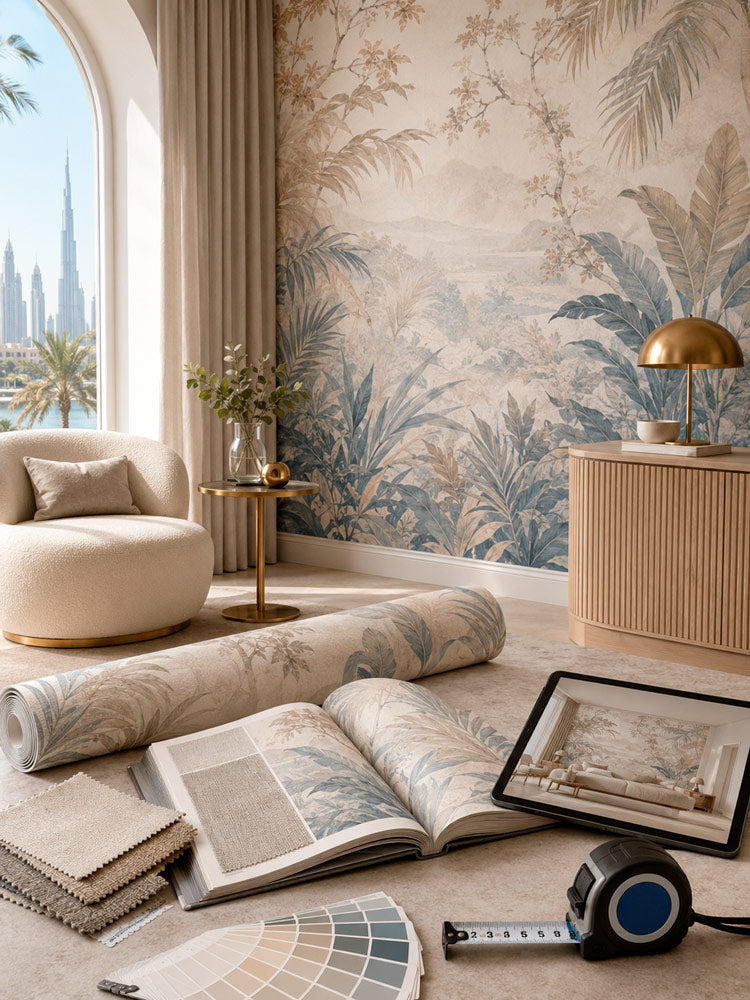
Walls influence the mood of a room long before furniture catches the eye. Interior designers use patterns, textures, colors, and clever placement to give ordinary spaces a distinctive personality. Their best tricks rarely involve expensive renovations.
A few smart choices of wallpaper in Dubai help homeowners achieve polished interiors, add visual depth, and express personal style without overwhelming the room or spending a fortune.
Choose patterns according to room size
Large patterns attract attention, while smaller prints give compact spaces a softer look. Designers match wallpaper patterns with room proportions to maintain visual balance. Vertical stripes draw the eye upwards, making low ceilings appear taller, while horizontal designs suggest greater width. Floral prints suit cozy bedrooms, and geometric patterns add character to modern living rooms.
Use texture to add depth
Smooth walls sometimes lack personality, especially in rooms with simple furniture and neutral colors. Textured wallpaper introduces another layer of interest without filling the space with decorative objects. Linen effects, grasscloth designs, and subtle embossed finishes offer warmth and dimension. Designers also pair textured walls with soft lighting to highlight their details. Even a restrained texture gives a room a refined appearance while keeping the overall decoration balanced.
Create one memorable feature wall
Covering every wall with a bold print can make a room feel crowded. Designers frequently select one prominent wall and let its pattern become the main attraction. Behind a bed, a sofa, or an entryway console, a striking design naturally draws attention. The remaining walls usually benefit from complementary paint colors. This approach adds personality, keeps visual clutter under control, and allows statement patterns to shine without dominating the entire interior.
Match wallpaper with existing furniture
Designers examine furniture, flooring, curtains, and decorative accessories before choosing a wall covering. Warm wooden furniture usually suits earthy shades, while sleek metal finishes pair well with cooler tones and contemporary patterns. Repeating one color across cushions, artwork, and wallpaper ties separate elements together. This simple technique gives the interior a coordinated appearance without forcing every item into an identical color scheme.
Pay attention to lighting
Lighting changes how wallpaper colors and patterns appear throughout the day. Natural sunlight reveals subtle details, while warm lamps soften darker shades and create an intimate atmosphere. Designers test samples against the wall at different times before making a final decision. Glossy finishes reflect light and add brightness, whereas matte surfaces offer a calmer look. Checking samples under actual room lighting helps avoid disappointing color choices.